
A Practical Guide for Regional Properties
A good poly water tank is one of the most dependable assets on a rural or regional property. Whether it’s collecting rainwater for the house, supplying stock troughs or backing up your irrigation, it will give you many years of reliable service. A little regular maintenance protects water quality, prevents small problems becoming costly ones, and gets the most out of your investment.
Here’s a simple routine you can follow all year round.
1. Keep your catchment clean
Your tank is only as clean as the water going into it. For rainwater tanks, the roof and gutters are where most contamination starts.
- Clear gutters regularly. Leaves, bird droppings and dust build up fast, especially after summer winds and through autumn leaf drop. Aim to clean them at least twice a year, and after any major storm.
- Trim overhanging branches. Trees close to the roof drop debris and give birds and possums easy access.
- Check your roof. Look for rust, flaking paint, moss or anything else that could wash into the tank.
- Consider a first-flush diverter. It sends the first, dirtiest runoff away from the tank, which keeps sediment out.
2. Check inlets, screens and overflows
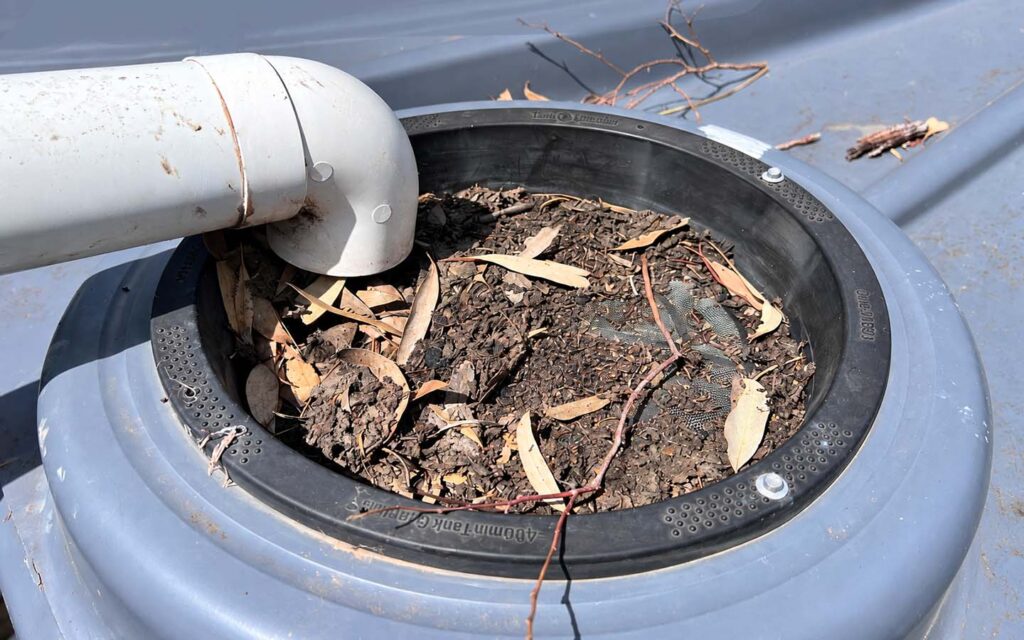
Mosquitoes, insects and small animals are the most common ways a tank is contaminated.
- Inspect inlet screens and mesh every few months and clear anything blocked. Replace mesh that is torn, corroded or brittle.
- Make sure the overflow outlet is screened and flows freely, and that it drains well away from the tank base.
- Confirm that the lid is secure and any access openings are properly sealed.
If you ever see mosquito larvae or wrigglers, it’s a sign that a screen has failed or gone missing. Fix the entry point first.
3. Inspect fittings, taps and pipework
Leaks waste water and can undermine the ground your tank sits on.
- Look over outlets, taps, valves and connections for drips or weeping.
- Check that flexible connectors are in good condition and not under strain. Flexible fittings help absorb movement as the tank fills and empties.
- Make sure pipes and pumps are properly supported so their weight isn’t hanging off the tank fittings.
- Replace worn washers and seals promptly.
4. Look after the base
A poly tank must sit on a firm, level, well-prepared base. Over time, heavy rain, erosion or ground movement can cause problems.
- Check that the base is still level, solid and free of washouts.
- Make sure water isn’t pooling or running around the base.
- Keep grass, weeds and debris cleared away from the base so you can spot problems early.
5. Check the tank itself
Poly tanks are tough, but a quick look-over a couple of times a year is worthwhile.
- Inspect the walls for scratches, cracks, bulges or discolouration.
- Wipe down the outside with mild soapy water and a soft cloth. Avoid solvents, strong chemicals and abrasive tools.
- Keep sharp objects, heavy items and ladders from leaning against the walls.
- Keep vegetation and fire hazards such as dry grass away from the tank, particularly heading into summer in bushfire-prone areas.
6. Manage sediment and cleaning
Over the years, fine sediment settles on the bottom of the tank. A small amount is normal, but a thick layer can affect taste, smell and clarity, and can be stirred up when water levels are low.
- Check for sludge every year or so by looking at water clarity and the quality coming out of the tap.
- As a general guide, many tanks benefit from cleaning (desludging) every two to three years, depending on your catchment, local conditions and how the water is used.
- Use a professional tank cleaner where possible. Tank interiors are confined spaces, and entering one yourself carries real safety risks.
If your tank supplies drinking water, follow your local health authority’s guidance on water quality, treatment and testing.
7. Seasonal tips for our region
Northern Victoria and southern NSW can swing between scorching summers, dry spells and heavy storm events.
- Before summer: clear gutters, check screens and make sure the area around the tank is fire-safe.
- After dry spells: expect more dust and debris on the roof, so use a first-flush diverter or let the first rain clear it before relying on collected water.
- After storms: check the roof, gutters, inlets and overflow for damage or blockages.
- Keep some water in the tank. A partially filled tank is more stable than an empty one, especially in strong winds.
A simple maintenance checklist
| How often | What to do |
|---|---|
| Every few months | Check inlet and overflow screens; look over taps, fittings and the base |
| Twice a year | Clean gutters; inspect the tank walls, lid and surrounding area |
| After storms | Check the roof, gutters, screens and overflow |
| Every 2–3 years | Check for sludge and arrange a professional clean if needed |
Protect your investment with a quality tank
Maintenance is easier when you start with a well-made tank. Riverina Poly water tanks are made right here in Echuca Moama from high-quality materials and built for Australia’s tough conditions. They are Australian Made and Owned, come in more than 30 colours, and are delivered across Northern Victoria and southern NSW. Round tanks carry a 10-year warranty, and slimline tanks a 5-year warranty.
Need advice on choosing the right tank, or want to talk through a problem with an existing one? Get in touch with the Riverina Poly team for a quote or a friendly chat.